

The Future of AI: Every Factory with Its Own Intelligent Agent.
A few months ago, I was speaking with the technical director of a large precision components manufacturer. He sighed and said, “AI is everywhere these days, but every time I try one of those general models, I feel like it doesn’t really understand our world.”
Their factory produces thousands of customized parts. Each part has its own process parameters, machine configurations, tool life, and inspection standards.
When they upload a CAD drawing into a general-purpose model, the AI might tell them: “This part has holes, slots, and threads.”
But what the engineer really wants to know is:
“At this depth, can we use 3+2-axis machining, or should we switch to 5-axis to gain 20% efficiency — and how will that affect cost?”
That’s the real reason AI often feels “out of place” in manufacturing:
It knows a lot, but not deeply enough. It can talk, but it can’t read the language of process.
1. The “Short Board Effect” of General AI Models
General models are powerful because they know everything in general. But manufacturing is complex because it demands specific knowledge.
Inside a real factory, AI must deal with:
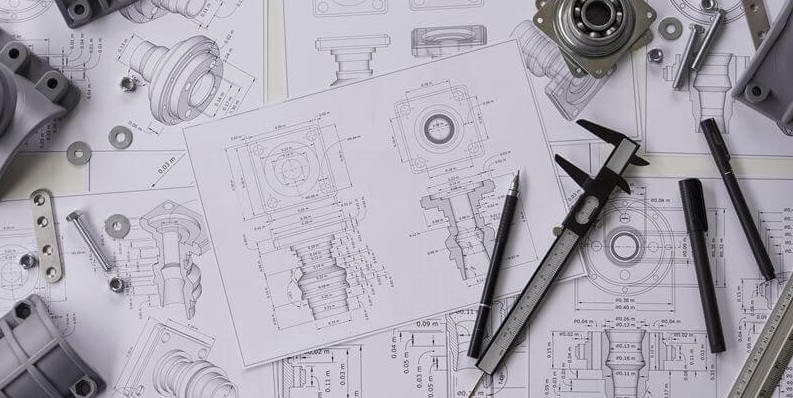
- Tens of thousands of 2D drawings, 3D CAD models, BOMs, PLC codes, and SOP documents;
- A mix of machine models, tool parameters, process routes, and surface treatment standards;
- And, most importantly, years of tacit engineering experience.
These are precisely what traditional AI struggles to adapt to. When a factory tries to use a general model to solve manufacturing problems, it usually hits three barriers:
- Misaligned understanding: AI knows what it is, but not how it’s done;
- Context disconnection: AI lacks the factory’s production context, so it can’t judge feasibility;
- Floating knowledge: AI’s answers can’t be verified or traced back to real shop-floor logic.
Manufacturing doesn’t need a chatty AI.
It needs an AI that can act, reason, understand machines, and be validated in production.
2. How “Configurable AI” Changes the Game
What truly allows AI to work inside a factory is configurability — the ability to redefine an AI’s cognitive boundaries based on a company’s own knowledge, data, and process logic.
Configurability isn’t about tweaking parameters. It’s about giving every factory its own AI DNA — turning AI from “industry-aware” into “factory-aware.”
At Leanplans, we break configurability into three layers:
(1) Knowledge Configurability
Factories can connect their own process knowledge bases into the AI system — including DFM rules, pricing logic, machining experience, inspection standards, and equipment manuals. The AI no longer relies on public data but learns from your private, verified knowledge.
Example:
“Which is more cost-effective, 6061 or 7075 aluminum?”
“What surface finish did we achieve last time using SLS for this enclosure?”
Instead of guessing, the AI answers based on your historical project data — following your logic.
(2) Role Configurability
Different teams get different AIs.
- Process engineers get an AI for DFM evaluation and process planning.
- Procurement managers get one for cost analysis and quotation.
- Quality managers get one focused on standards and tolerance assessment.
So, AI is no longer a “universal chatbot.” It becomes a team of digital employees, each aligned with a specific manufacturing role.
(3) Behavior Configurability
Configurable AI doesn’t just answer — it acts. Factories can define behavior boundaries such as:
- Automatically generating SOPs,
- Triggering quotation workflows,
- Creating work orders,
- Even executing CNC code.
AI agents evolve into cooperative nodes within your system ecosystem, closing the loop from Cognition → Decision → Execution.
3. Why Dedicated AI Agents Are the Future of Manufacturing
The essence of manufacturing isn’t data itself — it’s the ability to interpret data. And that interpretation varies dramatically between factories.
For example:
The same tolerance “±0.01 mm” means “scrap risk” in aerospace parts but merely “rework needed” in consumer electronics.
Only an AI that understands context can make the right judgment.
General models will never capture these subtle semantic differences. Configurable AI agents, on the other hand, internalize such knowledge nuances into their decision-making.
That’s why the future of AI in manufacturing won’t be about a single “super model” — it will be a landscape of factory-specific cognitive systems built and trained by each enterprise.
Collaboration Between AIs
As more companies build their own AI agents, something bigger happens:
- Within one factory:
The design AI outputs 3D models → the DFM AI evaluates manufacturability → the cost AI calculates pricing →
the process AI generates SOPs → forming a fully automated workflow. - Across multiple factories:
Each AI maintains its own knowledge boundary but can collaborate securely through an encrypted cloud middle platform —
forming a distributed manufacturing intelligence network.
This is not just about compute power. It’s about connection.
Conclusion: The Future AI Needs Personality
Manufacturing has always been a race of cognition. We used to compete on machines, manpower, and delivery speed. Now, the competition is about how deeply your AI understands your business.
A configurable AI agent is like a digital master craftsman — one who never retires, knows every process nuance, remembers every optimization,
and helps you make the right call at every critical step.
The future of AI in manufacturing isn’t one brain serving all. It’s every factory owning its own brain.
That’s the power of configurability. And that’s the next era of manufacturing intelligence.
Ready to build your own factory AI?
At Leanplans, we help manufacturers configure AI agents that understand your processes, your materials, and your goals.
📩 Contact Us Today