

When Cosmetic Packaging Meets AI: How R&D Engineers Gained Three Smart Assistants and Quadrupled Their Efficiency
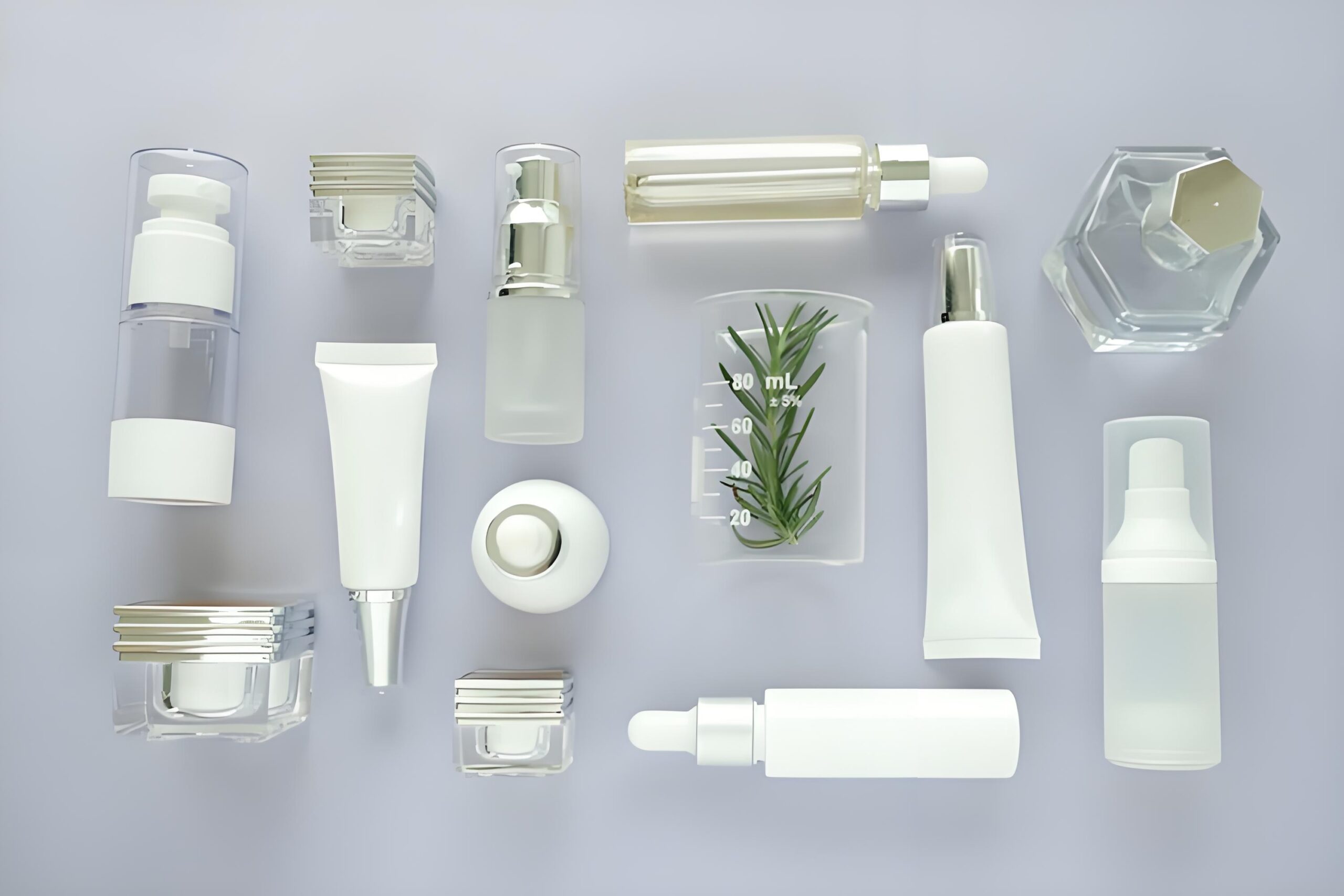
In China’s beauty and personal care supply chain, packaging manufacturing is often the invisible dividing line that determines product quality, brand recognition, and whether a shopper pauses for an extra second in front of the shelf.
One leading cosmetic plastic packaging manufacturer once described their challenge this way:
“We’re not short of technology or experience. What we lack is an engine that accelerates collaboration across R&D, manufacturing, and decision-making.”
This company is a core supplier to numerous global beauty brands and a pioneer across the full lifecycle of cosmetic packaging—materials R&D, mold manufacturing, injection molding, assembly, and product testing. Through years of engineering-driven innovation, they have built one of the most complete ecosystems in China’s beauty packaging industry.
Yet, as their R&D director noted:
“When clients go from launching 10 new products a year to 100, even the best-optimized workflows start to break.”
01. The Bottleneck: Innovation Slowed by “R&D Friction”
Developing cosmetic packaging presents three core challenges:
- Long cycles — appearance design to structural validation often takes three weeks or more.
- High cost of iteration — any structural tweak can affect tooling and production cost.
- Communication gaps — information bounces repeatedly between design, process, and procurement teams.
For a company with multiple business units and cross-disciplinary teams, every new packaging concept becomes a complex system project—balancing visual creativity with sustainability, mold complexity, manufacturability, and long-term tooling reliability.
This is exactly where AI entered the picture.
02. The Collaboration: Bringing AI to the Frontline of R&D
When the Leanplans (立谱智造) team received the company’s initial request earlier this year, their goal was clear:
“We want to make design decisions, cost estimation, and prototyping smarter—so our clients can validate ideas faster.”
The joint project was divided into two major tracks:
- AI-powered digital solution — covering appearance design assistance, drawing review, manufacturability analysis, and instant cost estimation.
- Flexible prototyping & small-batch trial runs — integrating 3D printing, CNC machining, and injection molding to validate process feasibility.
This wasn’t just an efficiency upgrade—it was a restructuring of their entire R&D workflow.
How AI reshaped the way engineers work
The system starts with automatic drawing recognition and manufacturability analysis.
When R&D engineers upload their 3D models, the AI automatically identifies key structural features and checks:
- wall thickness
- undercuts
- draft angles
- assembly interference
- mold complexity
Within 60 seconds, it generates a full DFM report.
Previously, this required several process engineers working for days. Now, it takes minutes. And the AI doesn’t just point out defects—it recommends specific engineering adjustments, such as where thin walls may cause shrinkage or which undercuts require mold parting redesign.
As one R&D engineer described it:
“The DFM work that used to rely heavily on experience—AI now highlights the risks instantly and suggests how to fix them.”
From analysis → cost → prototyping, all in one interface
After AI evaluation, the system automatically generates quotations based on:
- material type
- production method
- volume range
- estimated cycle time
Engineers can also select prototyping methods directly on the same interface. The AI evaluates the model and recommends the most suitable process:
- Appearance parts → 3D printing
- Structural parts → CNC machining
- Small-batch validation → aluminum-mold injection molding
This integrated workflow of “evaluate → cost → prototype” gives R&D teams a complete decision loop without back-and-forth communication.
During the production validation stage, Leanplans’ cloud factory steps in:
- 3D printing for transparent and aesthetic parts — samples in 24 hours
- CNC machining for structural strength and tolerance validation
- Small-batch molding for early batch consistency evaluation
Behind the scenes, the AI matches machines, process parameters, and routing so prototype data becomes fully traceable.
The result?
The company cut its end-to-end development cycle from 60 days to 18 days—a nearly 4× increase in efficiency.
03. The Outcome: Faster R&D, More Accurate Costs
After three months of validation, the company’s core R&D workflow showed dramatic changes:
| Stage | Before | After |
|---|---|---|
| Structural evaluation | 2 days | 60 minutes |
| Prototype cycle | 15 days | 5 days |
| Cost estimation | 3 hours | 60 seconds |
| Complete project cycle | 60 days | 18 days |
More importantly, the organization’s process knowledge is now being captured and reused.
What once depended on individual experience is gradually becoming data-driven.
04. Insight: AI Is Becoming the New Productivity Engine at the Front of R&D
The beauty industry is shifting from winning by aesthetics to winning by intelligence. In the past, creativity set the pace. In the future, the real competitive edge will come from how precisely companies control their R&D processes.
Today, AI’s value is not in replacing people—but in accelerating progress.
It enables R&D teams to validate ideas faster, allows process engineers to influence manufacturability earlier, and helps manufacturing teams evaluate cost and lead time more precisely. Once these intelligent components connect, a new R&D paradigm emerges:
- from “humans find problems” → “AI finds answers”
- from experience-based judgement → data-driven decisions
This cosmetic packaging manufacturer has now fully integrated AI into their standard R&D workflow. Every new project begins with AI for drawing review, cost estimation, and prototyping. They’ve become a leading example of digital transformation in the beauty packaging sector—and a signal of what’s to come.
The future of manufacturing is not only smart production, but smart R&D.
Ready to build your own factory AI?
At Leanplans, we help manufacturers configure AI agents that understand your processes, your materials, and your goals.
📩 Contact Us Today