

A Hundred Factories, a Hundred AIs
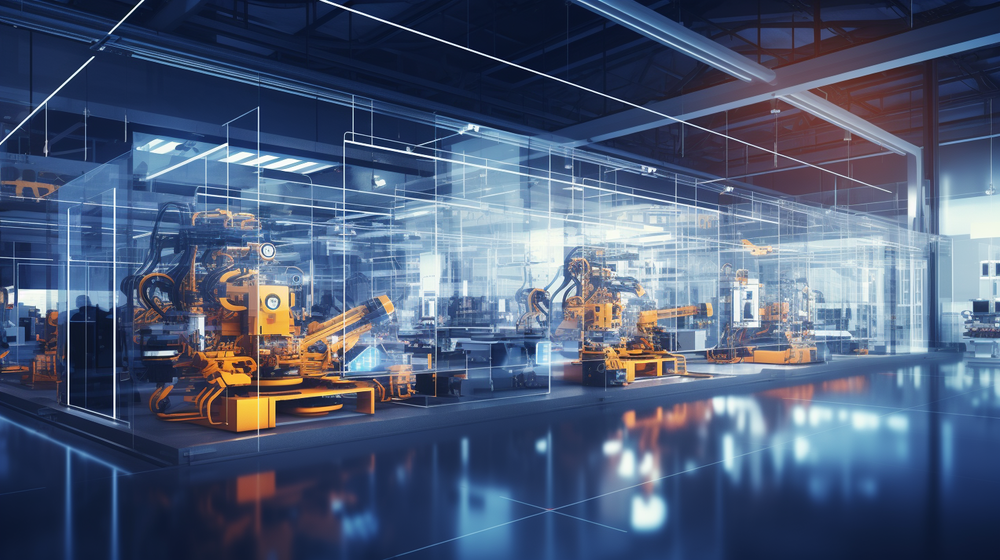
— The Era of “Personalized Intelligence” in Manufacturing
Recently, we deployed AI agent systems for several manufacturing clients. Interestingly, even though the architecture was exactly the same, each factory’s AI developed a completely different “personality.”
In an automotive parts plant, it instantly spotted issues like overcutting, under-milling, and assembly interference, automatically generating DFM (Design for Manufacturability) reports.
In a medical equipment plant, it compared material selections and machining precision, alerted designers to surface treatment and tolerance risks, and helped maintain process consistency.
In a 3C manufacturing plant, it analyzed drawings, materials, quantities, and processes—producing accurate quotations and production suggestions within seconds.
Same AI, different souls.
Manufacturing AI is evolving with its own “personality.”
1. Manufacturing Doesn’t Need One-Size-Fits-All Intelligence
Walk into ten factories, and you’ll find ten completely different logics.
Some pursue precision; others prioritize lead time and cost.
Some have complex process routes; others rely on flexible production lines.
Some depend on craftsmanship and experience; others are fully digitalized.
These differences mean that a single AI system applied everywhere is like fitting a standard mold into different production lines—it will always misalign.
Manufacturing has never been about universality, but differentiation.
An AI that truly understands manufacturing isn’t one unified answer—it’s a hundred adaptive solutions shaped by real production logic.
2. Factory AI Also Develops “Personality Types”
At Leanplans, we’ve noticed an interesting pattern: the “growth path” of an AI agent is closely related to a factory’s culture.
We’ve encountered three typical AI personalities:
Engineering-Type AI — Precise, rigorous, logical.
Common in automotive and aerospace industries.
Excellent at DFM evaluation, process simulation, and error tracking.
No emotions—only data.
Operational-Type AI — Fast, pragmatic, cost-driven.
Typical of consumer electronics and smart hardware plants.
Focuses on quotation, scheduling, and cost optimization.
Acts like an “AI-powered supply chain coordinator.”
Creative-Type AI — Insightful, flexible, design-oriented.
Usually found in new materials and R&D teams.
Suggests structure improvements and design optimizations.
Behaves like a digital design engineer.
There’s no right or wrong among them—they simply reflect different production cultures, decision habits, and knowledge structures.
3. An AI’s “Environment” Shapes Its Thinking
AI isn’t a plug-and-play algorithm—it’s more like a new hire.
If it joins a traditional factory, its first lesson is understanding the language of seasoned technicians.
If it joins a digital factory, it must learn MES logic and production loops.
A configurable AI acts like a “learning worker”: it absorbs enterprise knowledge, memorizes process standards, understands every production line’s rhythm, and balances data with experience.
That’s why we say: AI knowledge isn’t preloaded—it’s fed and grown.
4. Why “Personalized AI” Matters More Than “General Models”
General-purpose AI models are great at “knowing a lot,” but manufacturing needs AI that “knows only what’s relevant.”
For example, when an engineer asks:
“Can this aluminum part be converted to a die-casting process?”
A general AI might respond with a technical explanation.
But a personalized factory AI would say:
“Based on your past MJF process records, switching to die-casting is more cost-efficient above 500 units, but wall thickness must be adjusted and draft angles added.”
It doesn’t just answer—it understands context, references history, and connects systems.
That’s the key difference between generic AI and factory AI:
one talks theory; the other drives decisions.
5. AI’s Personality Is a Reflection of Factory Culture
We’ve come to realize that AI doesn’t replace anyone—it mirrors the spirit of the factory itself.
If your factory values craftsmanship, it learns precision.
If it values efficiency, it learns optimization.
If it values innovation, it learns to design boldly.
In other words, AI’s character is your factory’s character.
6. Conclusion: AI Is Not a Model—It’s a Mirror
The future of manufacturing isn’t one universal AI guiding every factory,
but a hundred unique AIs evolving within their own production ecosystems.
When every factory owns its own intelligent agent,
manufacturing will truly enter the Era of Personalized Intelligence—an era where AI understands you, grows with you, and helps preserve your factory’s wisdom in digital form.
AI’s mission is not to standardize humans,
but to ensure every factory’s experience and knowledge
are passed down intelligently and endlessly.
📩 Contact Us Today
Every factory deserves its own intelligence.
Leanplans empowers manufacturers to train, configure, and evolve AI agents tailored to their production DNA.